The Iconic Floating Torii
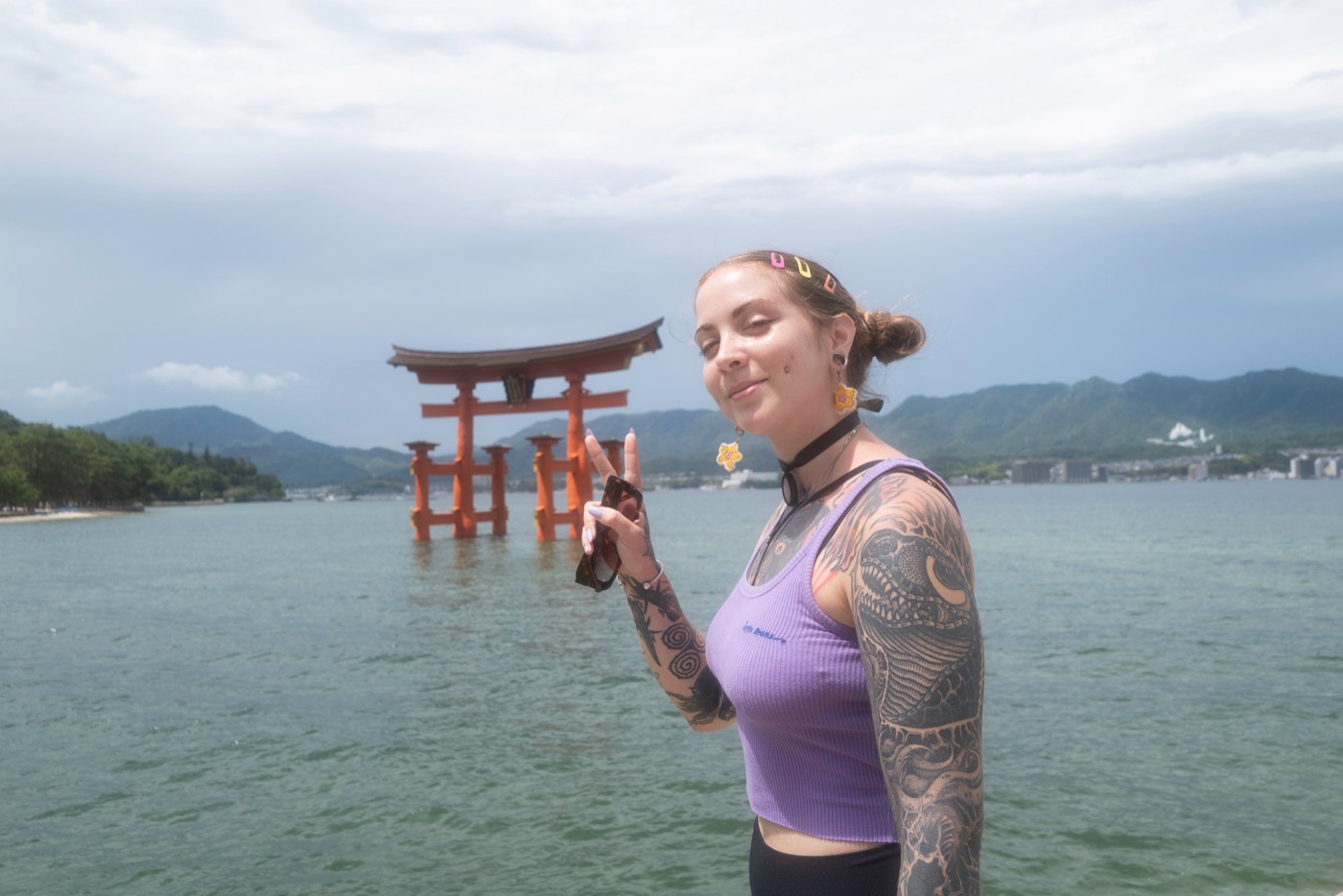
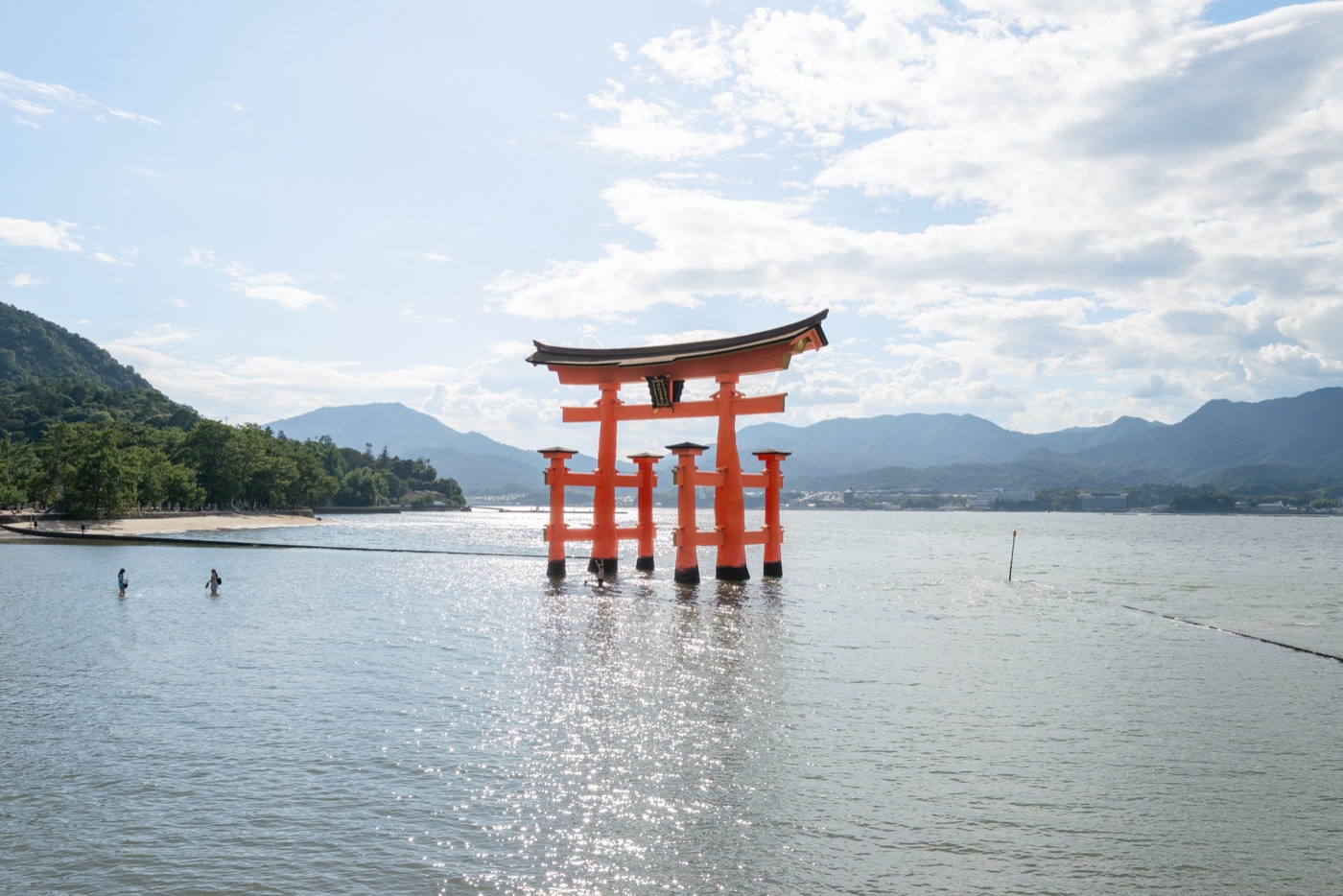
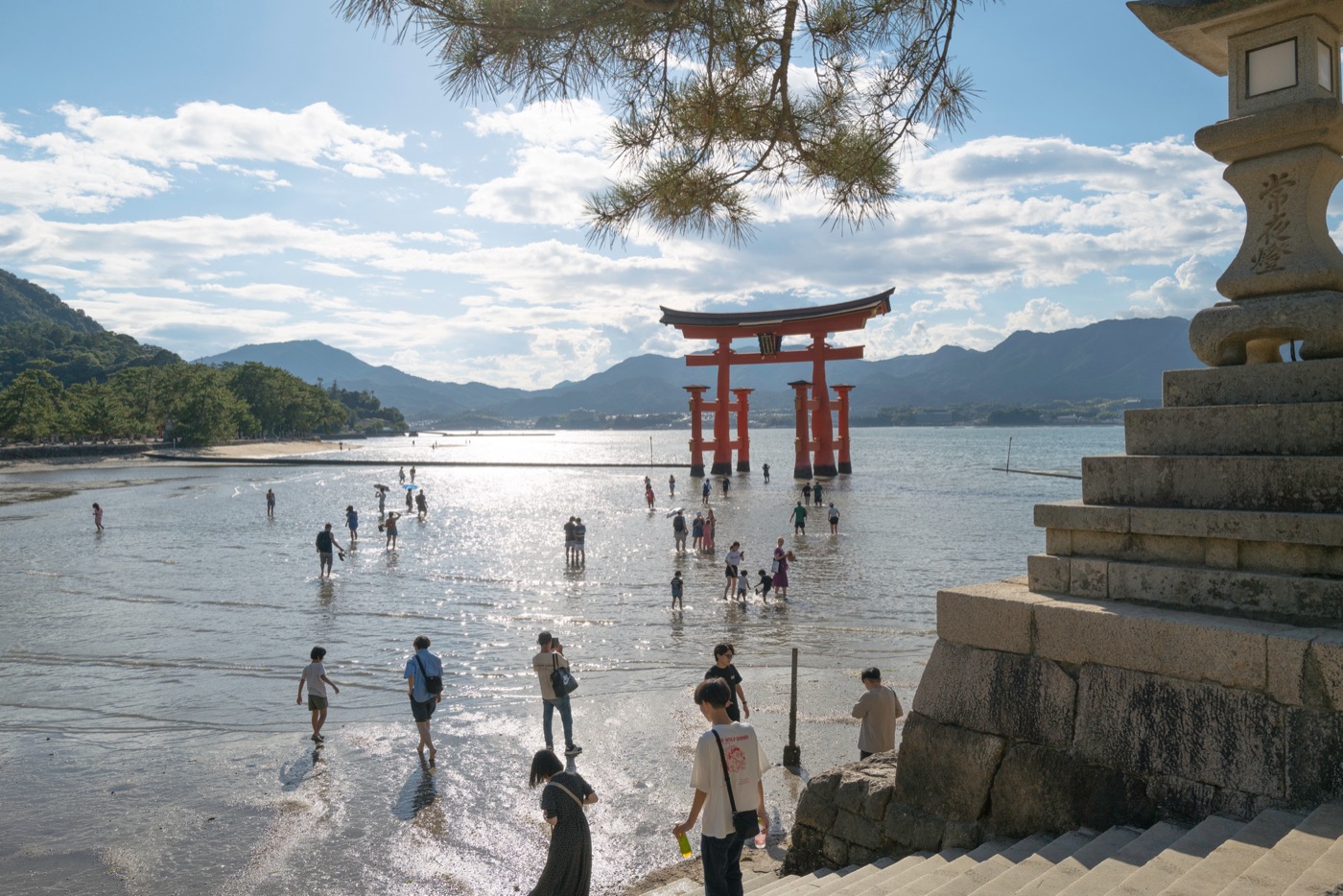
Miyajima, officially known as Itsukushima, is a small island in Hiroshima Bay that has been considered sacred ground for centuries. Its most famous feature is the grand torii gate of Itsukushima Shrine, which appears to float on the water at high tide. Built from camphor wood and standing over 16 meters tall, the vermillion gate is one of the most photographed structures in Japan. At low tide, visitors can walk out across the tidal flats and stand directly beneath it, a completely different experience from viewing it across the water. The gate was most recently reconstructed and restored in a project completed in late 2022, and its fresh vermillion paint makes it especially striking against the forested hills behind.
Itsukushima Shrine and the Tidal Stage
Itsukushima Shrine is a UNESCO World Heritage Site with a design unlike any other shrine in Japan. The main hall and corridors are built on stilts over the tidal flats, so that at high tide the entire complex appears to float alongside the torii gate. The shrine dates to the sixth century, though its current form was established by Taira no Kiyomori in the twelfth century. One distinctive feature is the open-air Noh stage, the only one in Japan built over water. Visiting at different tidal states offers remarkably different impressions of the same site.
Wild Deer and the Island Atmosphere
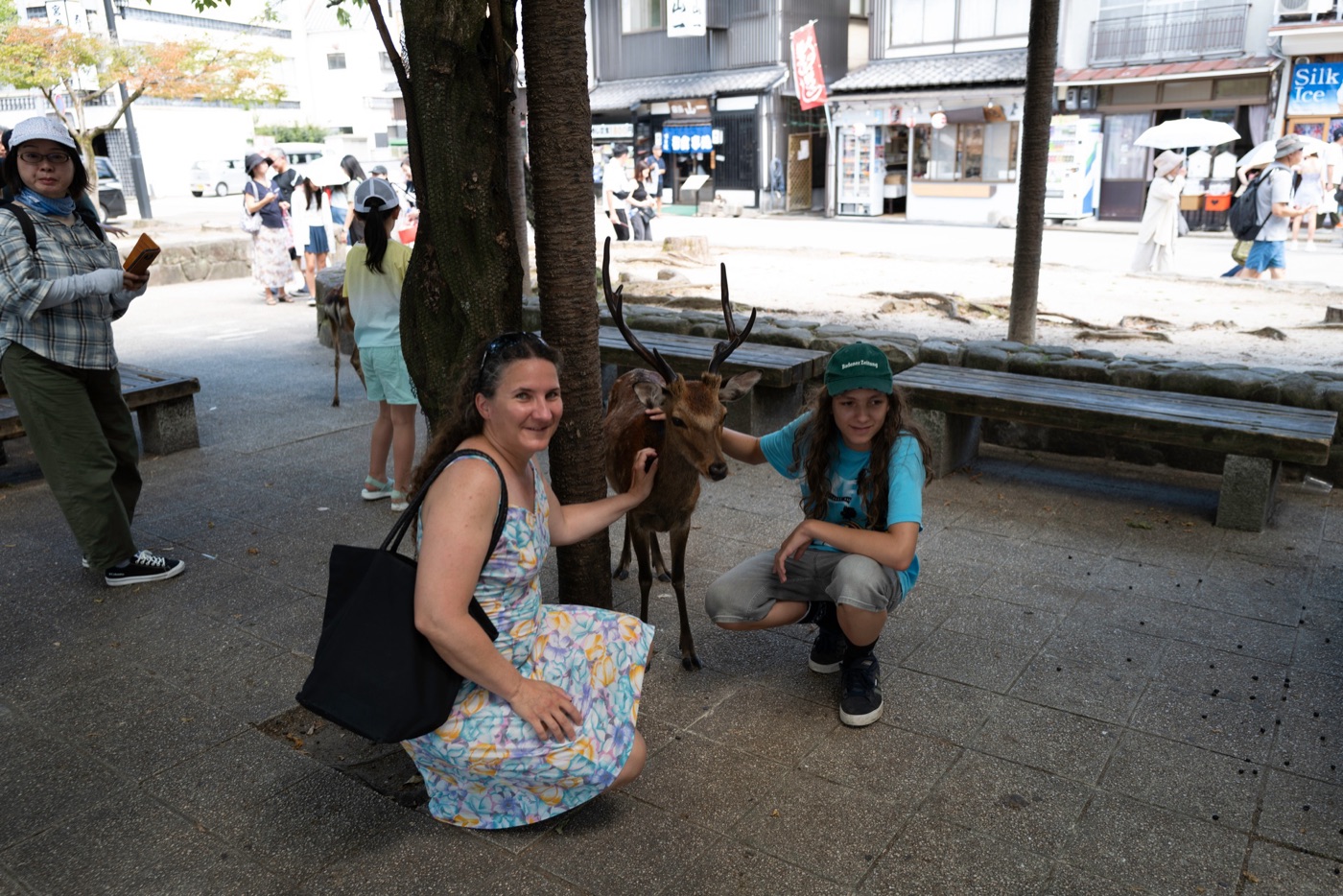
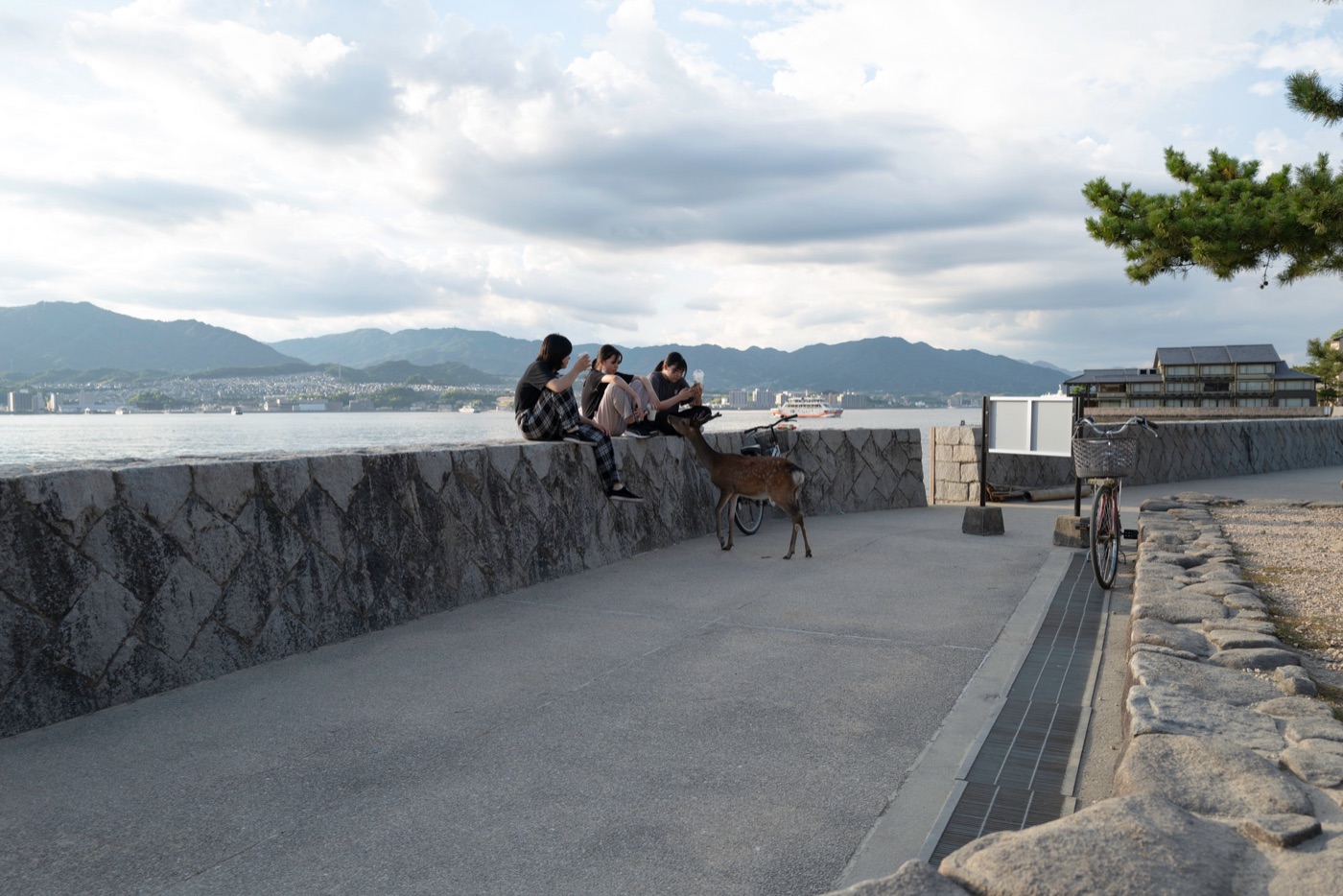
Like Nara, Miyajima is home to wild deer that roam freely through the streets and along the waterfront. They are calm and accustomed to humans, though visitors should guard food and paper items. The main shopping street, Omotesando, runs from the ferry terminal toward the shrine and is lined with souvenir shops and food stalls. The signature treat is momiji manju, a small cake shaped like a maple leaf and filled with red bean paste, custard, or chocolate. Several shops bake them fresh on the spot. Grilled oysters from Hiroshima Bay are another specialty, served along the waterfront during cooler months.
Hiking Mount Misen
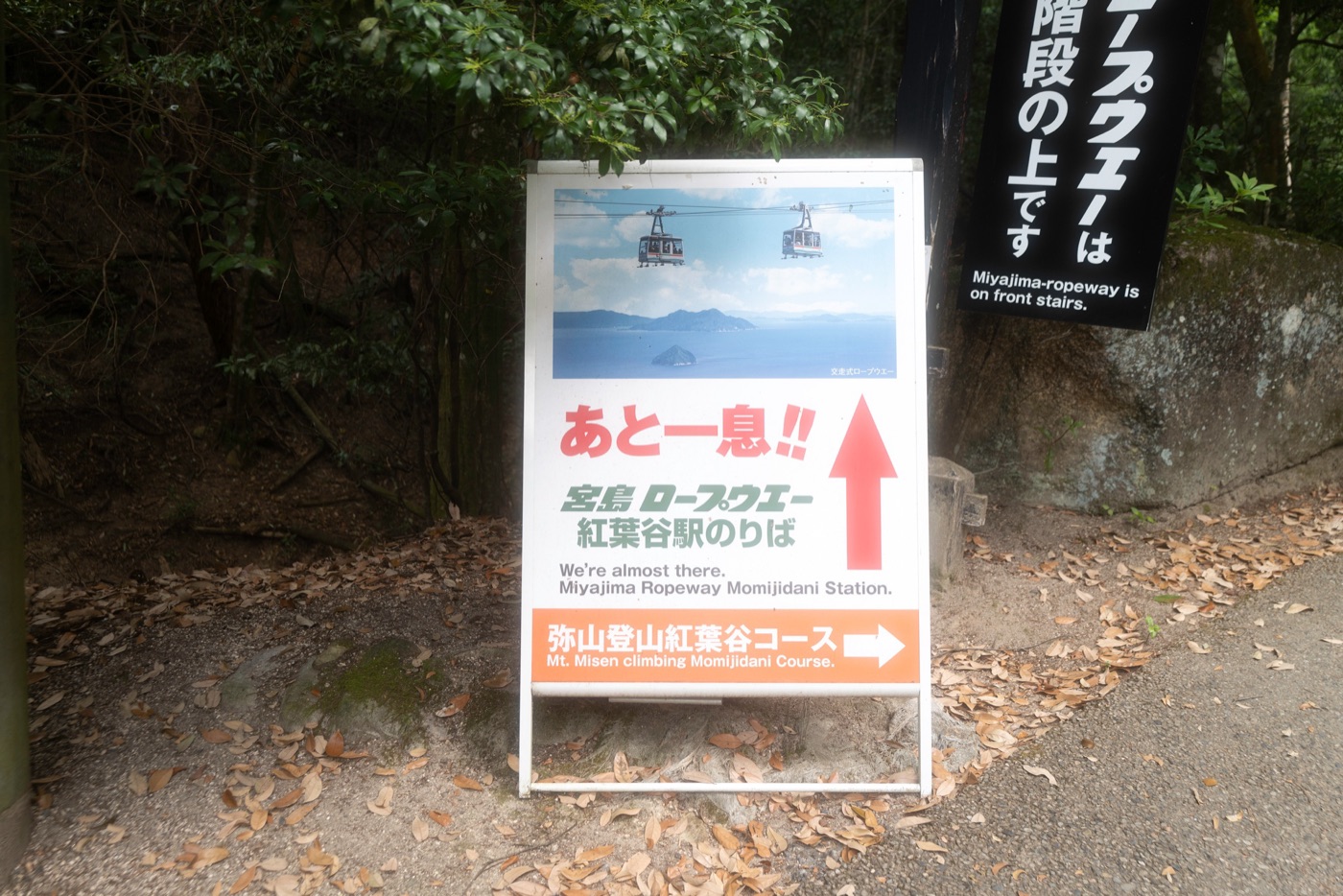
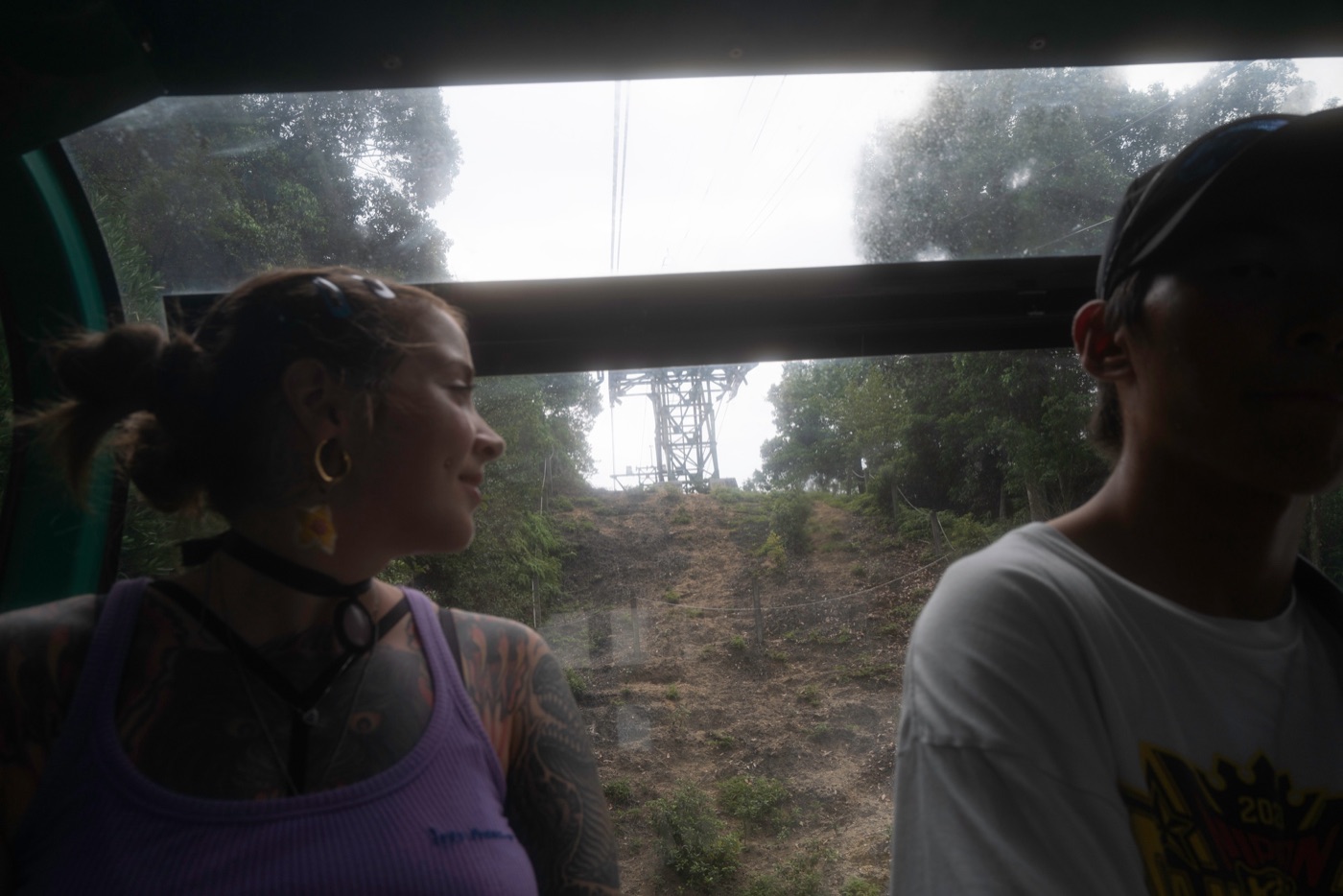
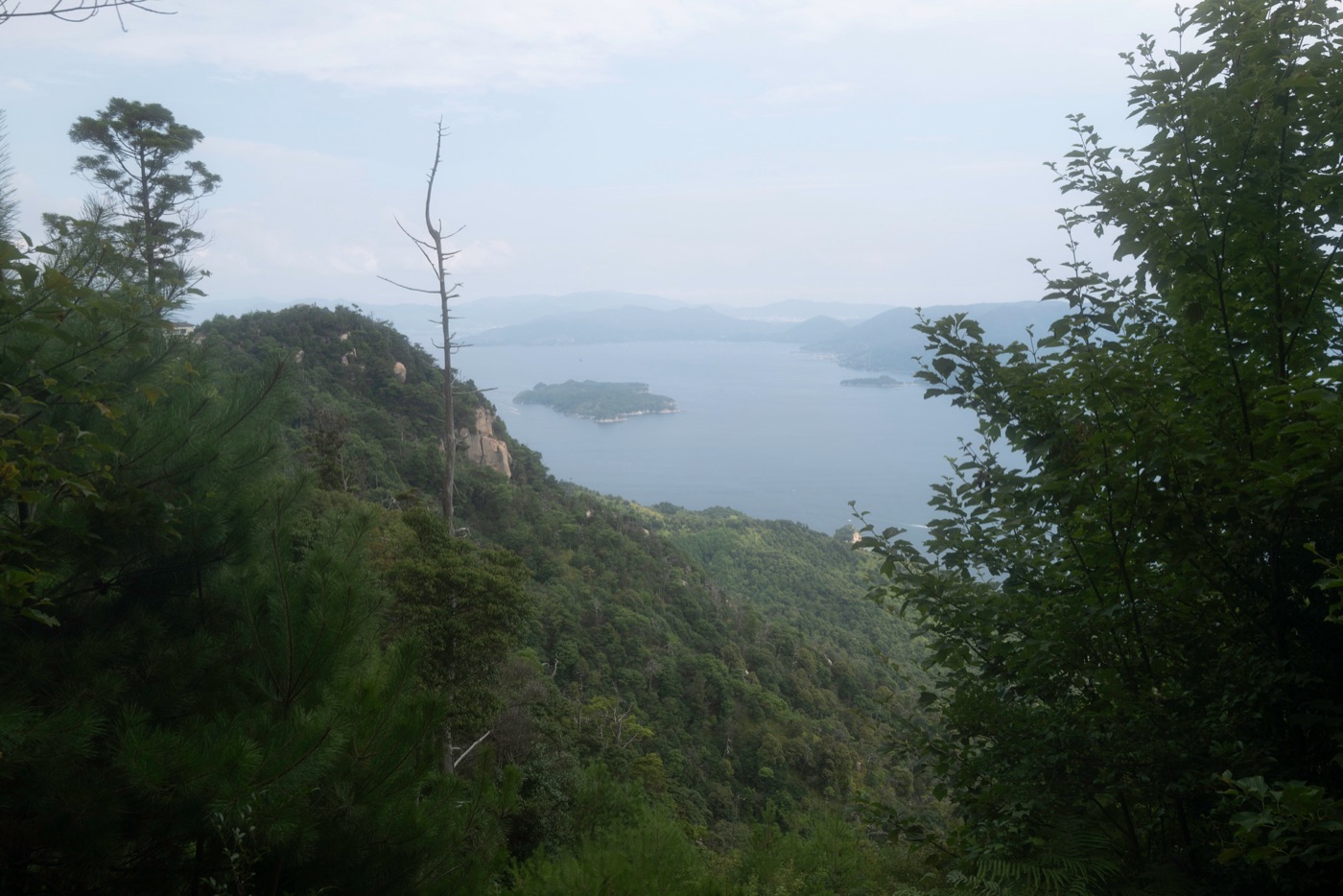
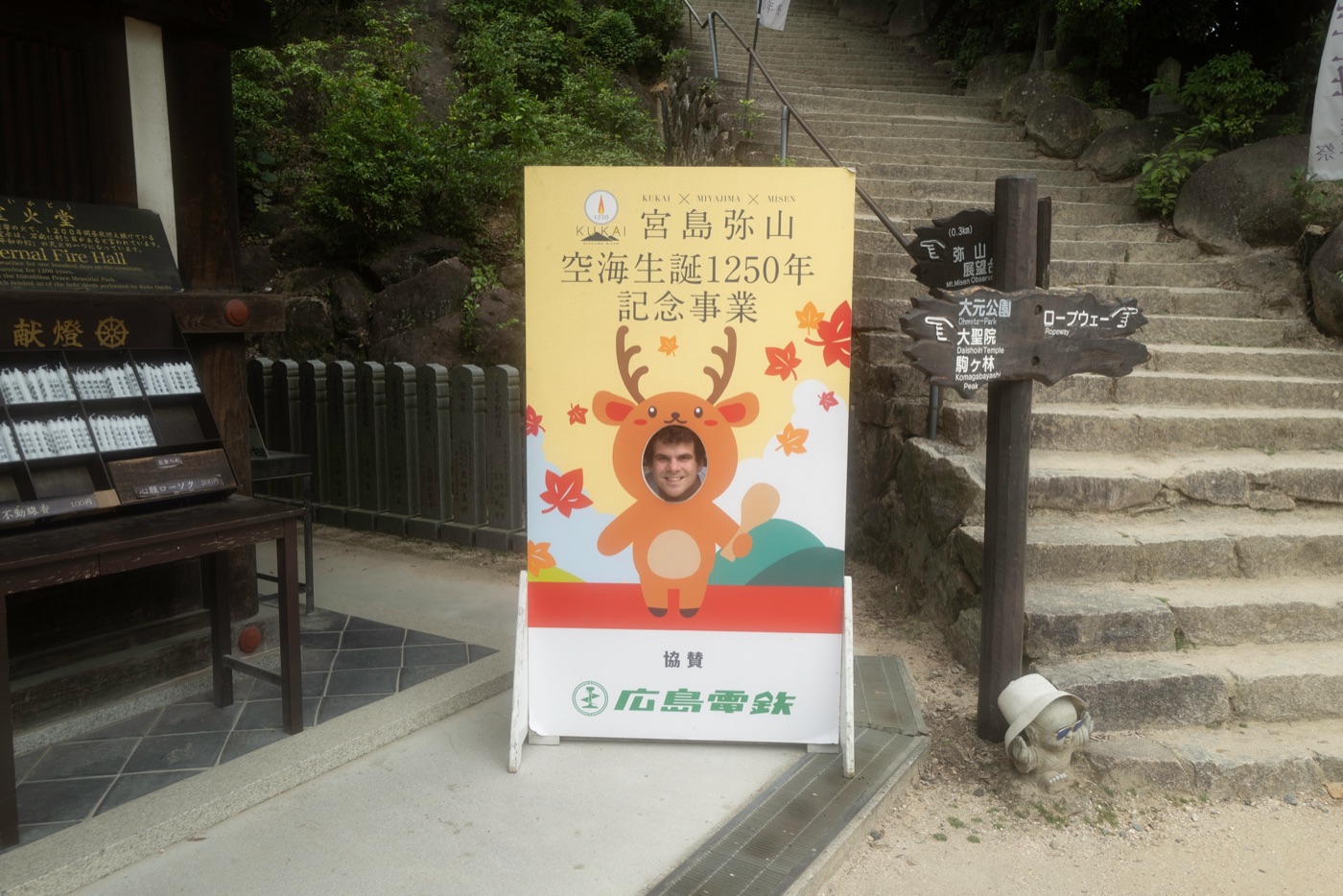
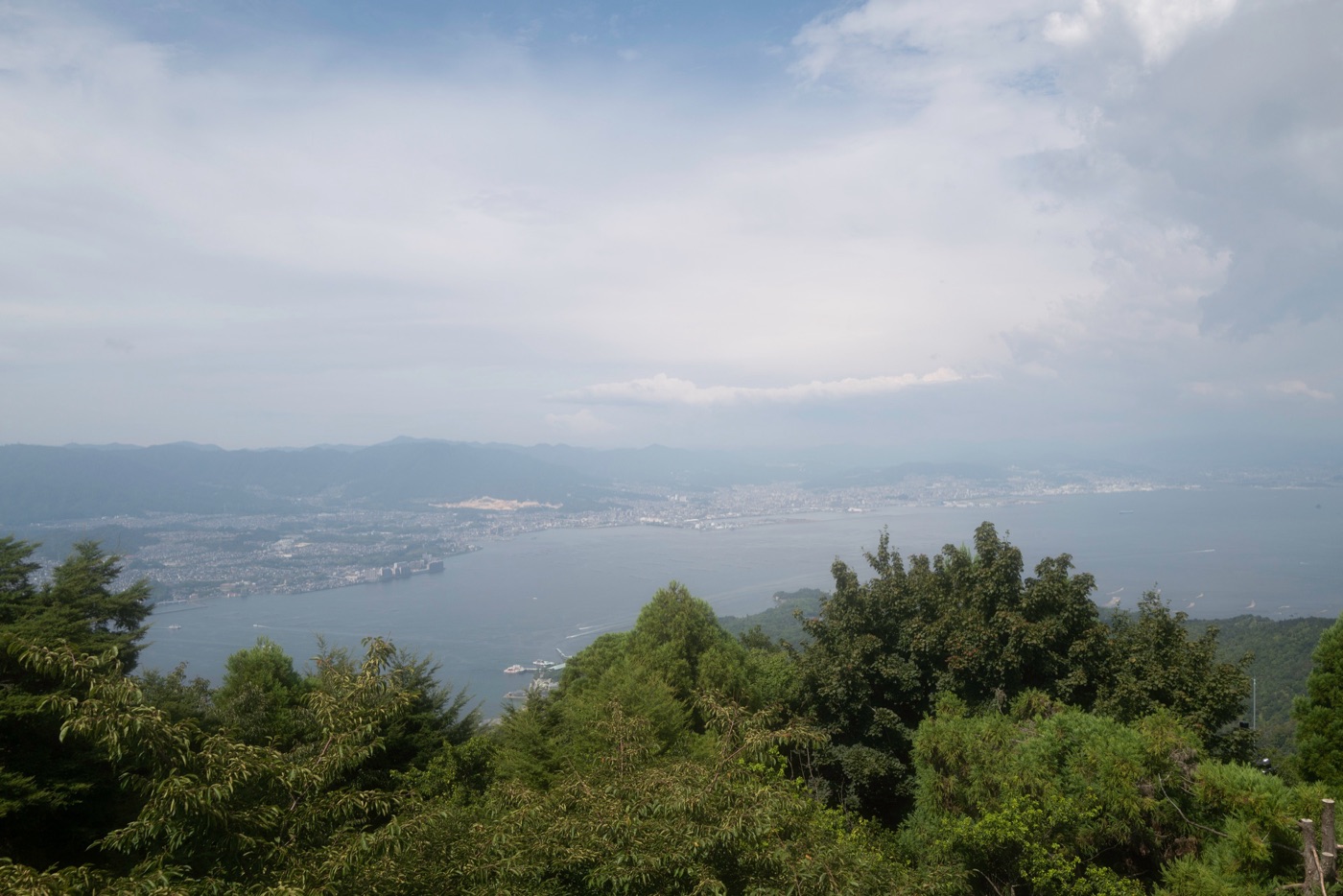
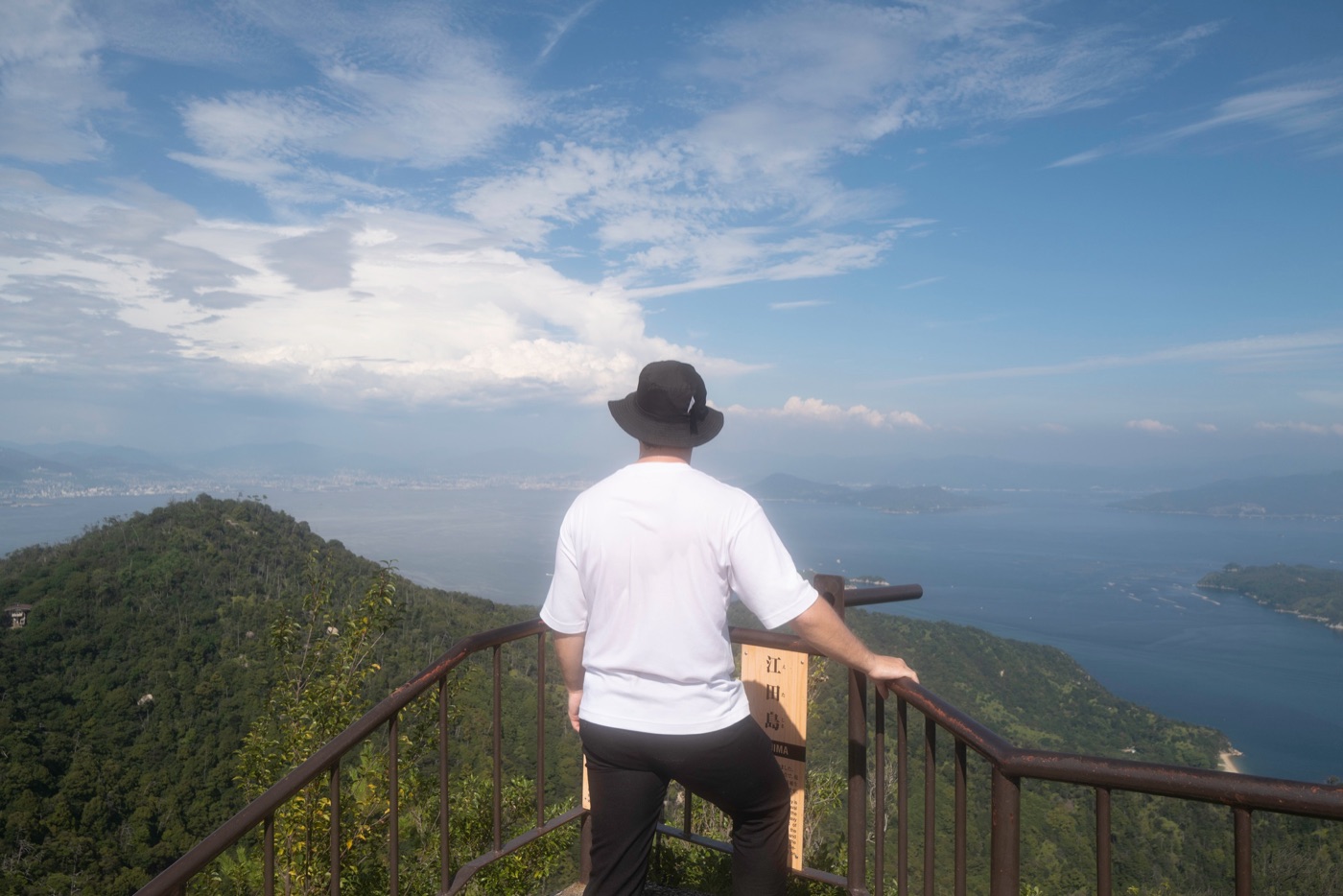
For those who want more than the shrine precinct, Mount Misen rises to 535 meters at the center of the island. A ropeway carries visitors partway up, but the final stretch to the summit is on foot, through a forest of ancient trees and moss-covered boulders. At the top, a series of observation platforms offers panoramic views over the Seto Inland Sea and the surrounding islands. The mountain is considered sacred, and several small temples and halls are scattered along the trails. One of these houses an eternal flame said to have been burning since the monk Kukai lit it over 1,200 years ago. The hike is moderate in difficulty and takes roughly 90 minutes round-trip from the ropeway station, making it manageable for most visitors.
How to Get There from Hiroshima
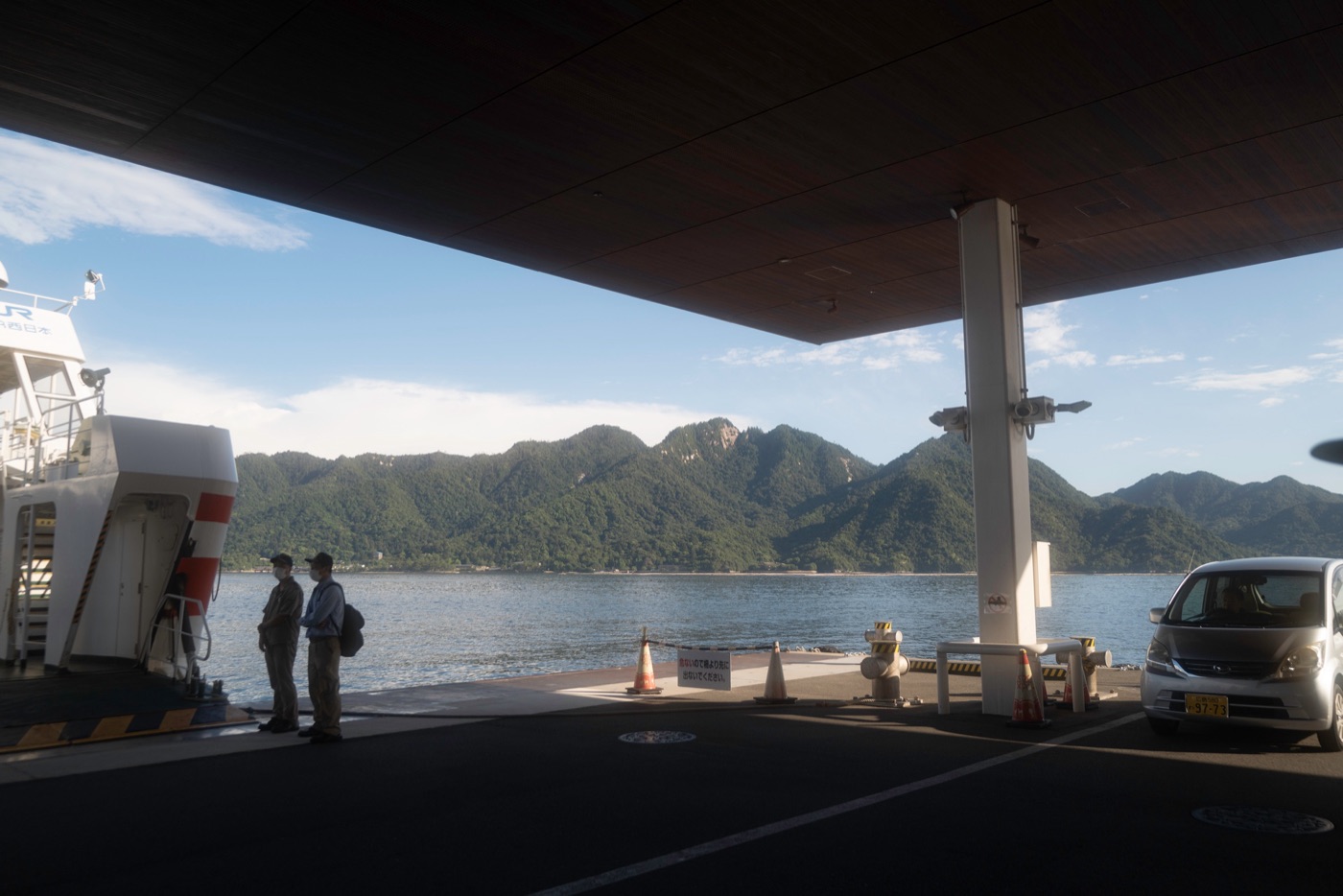
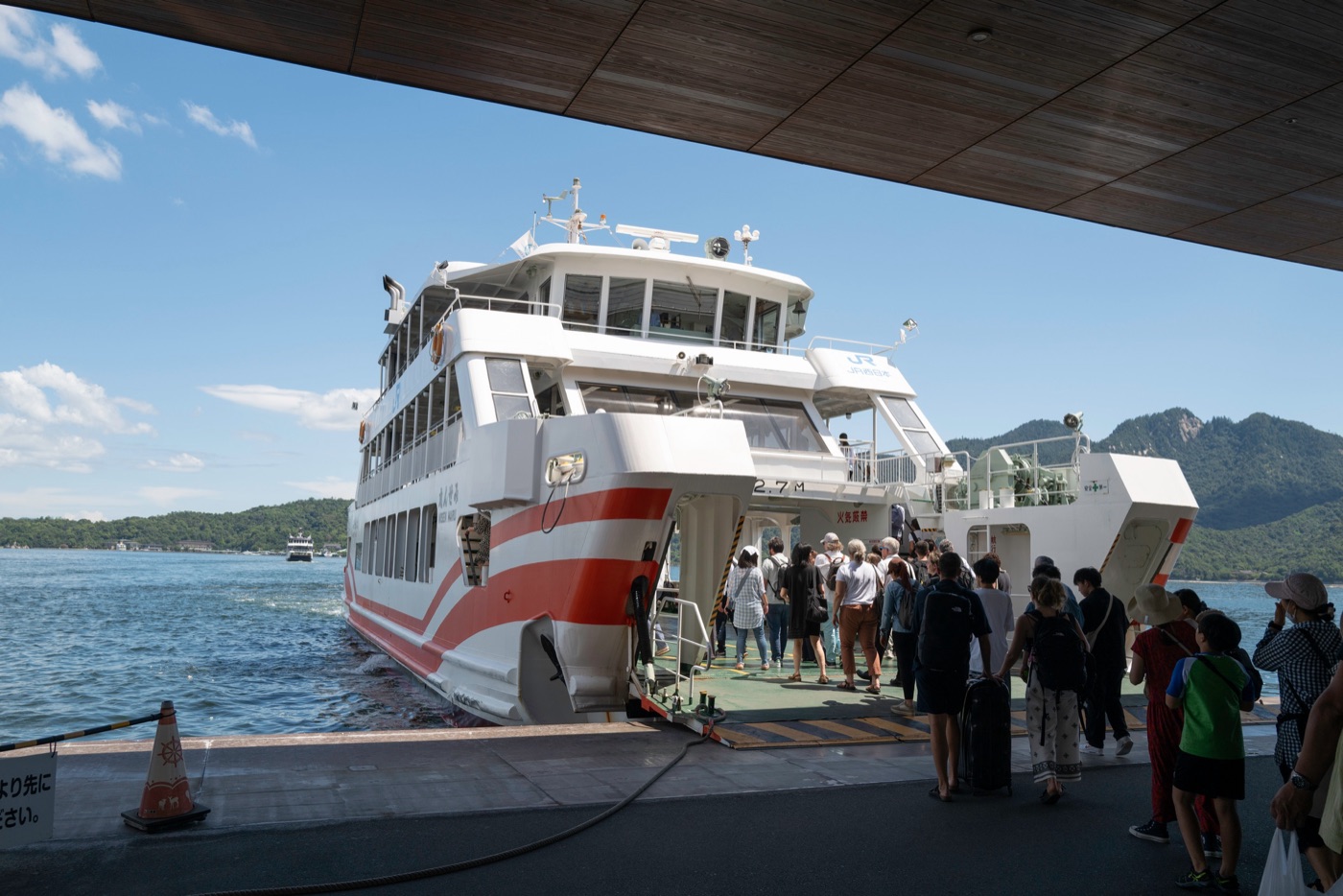
Miyajima is one of the easiest day trips from Hiroshima. From Hiroshima Station, take the JR San’yo Line to Miyajimaguchi Station, a journey of about 25 minutes. From there, the JR Miyajima Ferry crosses to the island in ten minutes and is covered by the Japan Rail Pass. An alternative ferry service operated by Matsudai Kisen also runs from the same pier. The island is compact enough to explore on foot, and most visitors spend between three and five hours here. Staying overnight at one of the island’s ryokan allows you to experience the quieter side of Miyajima after the day-trippers leave — the illuminated torii and nearly empty streets after dark are something quite special.