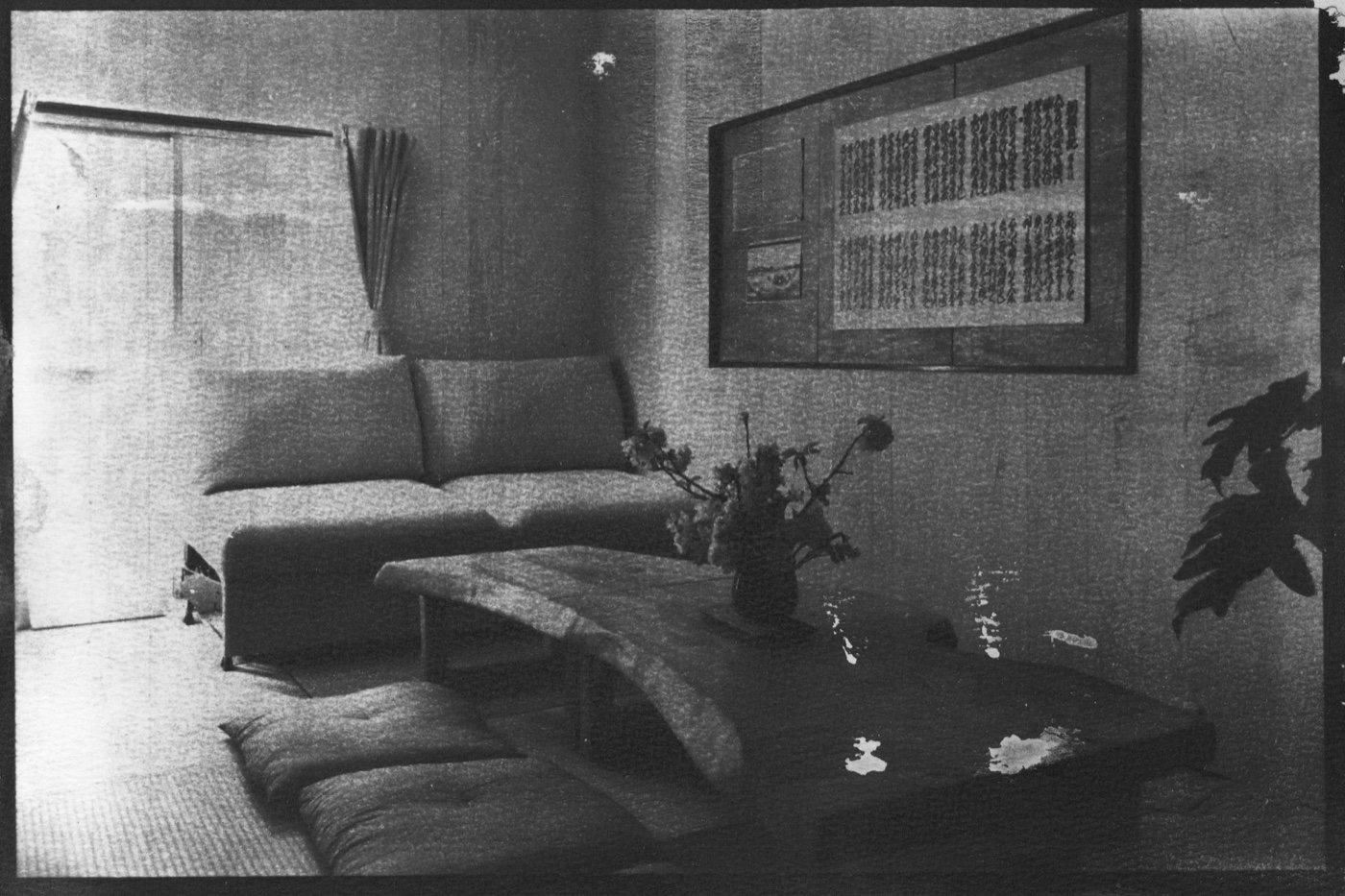
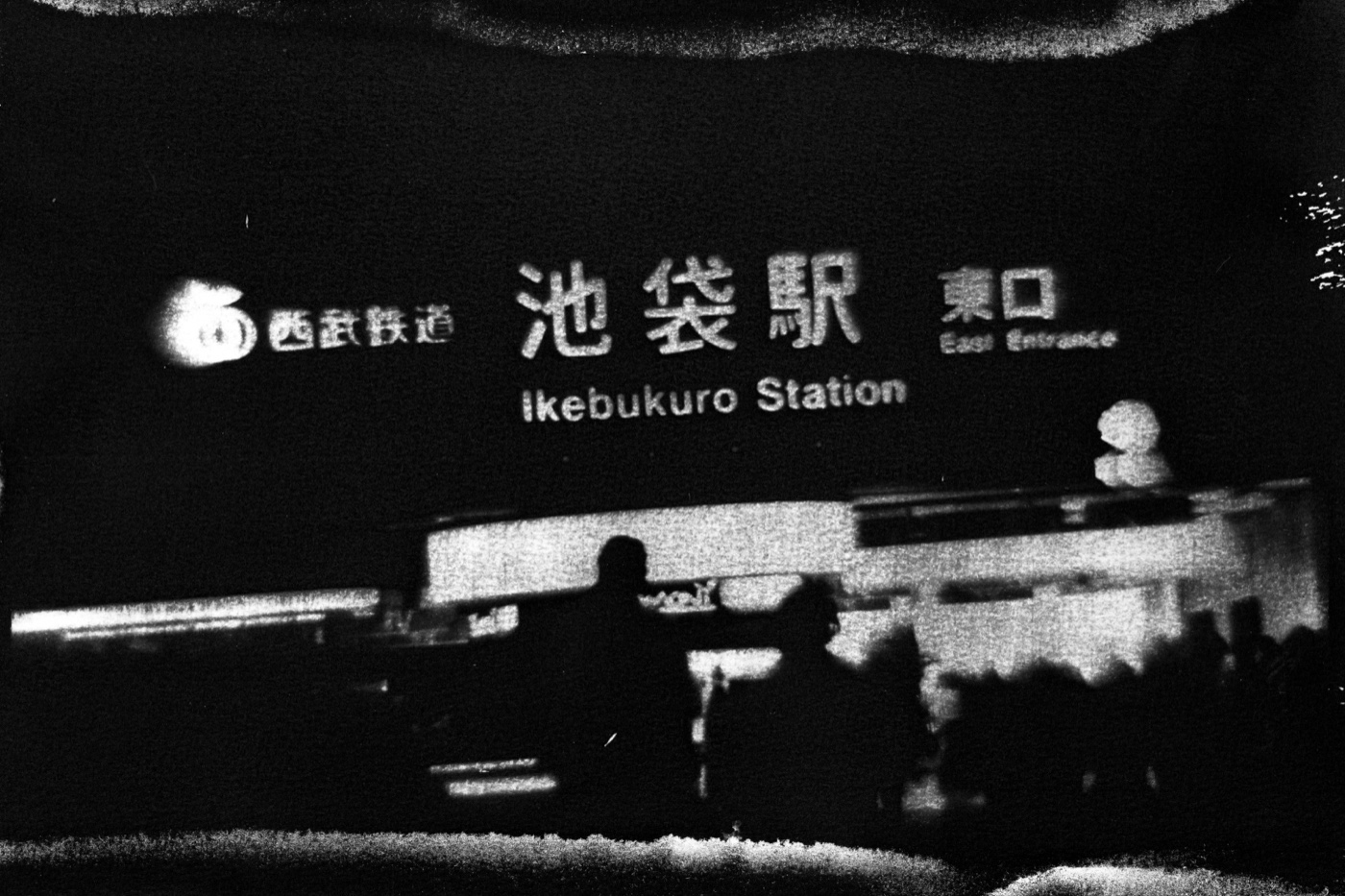
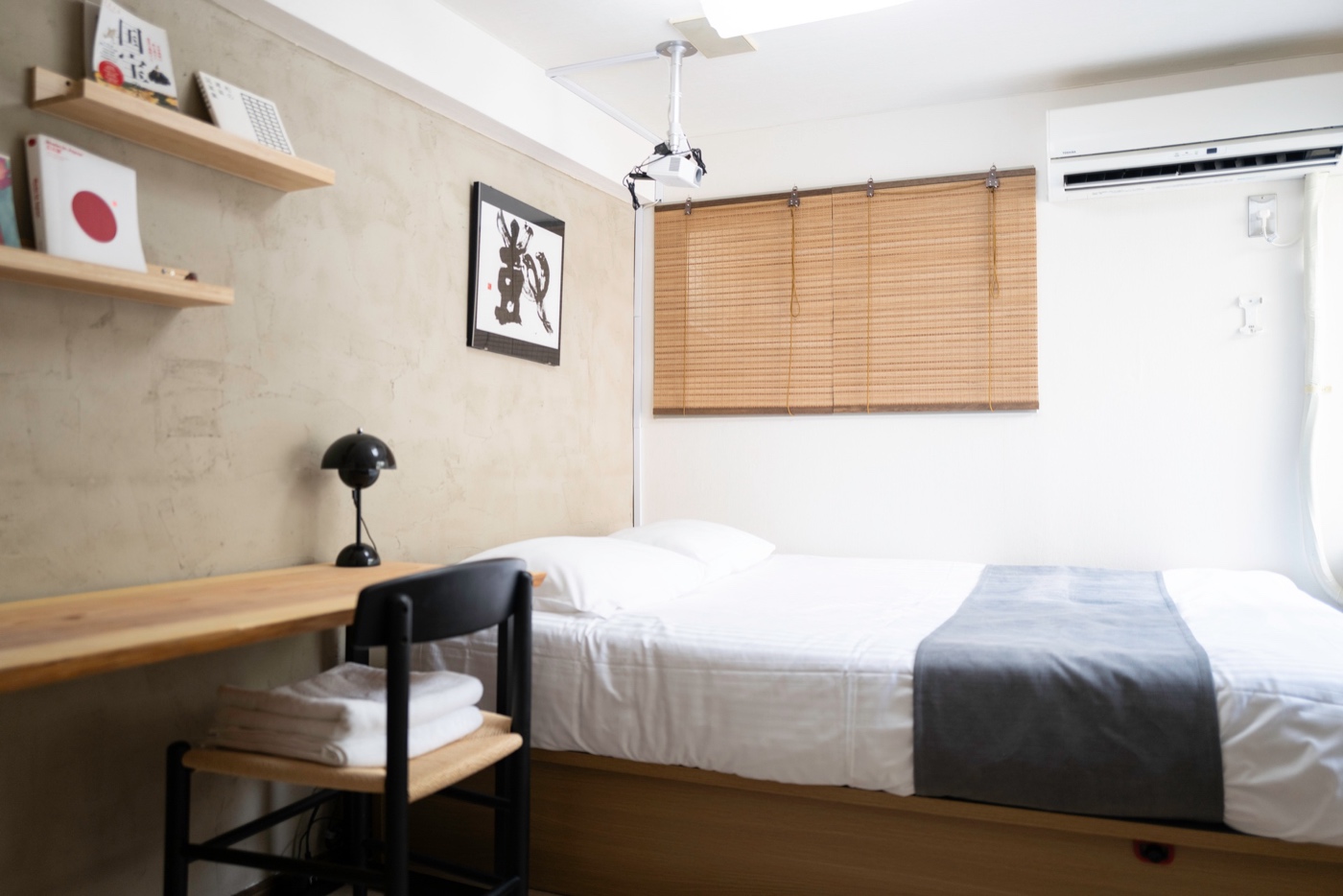
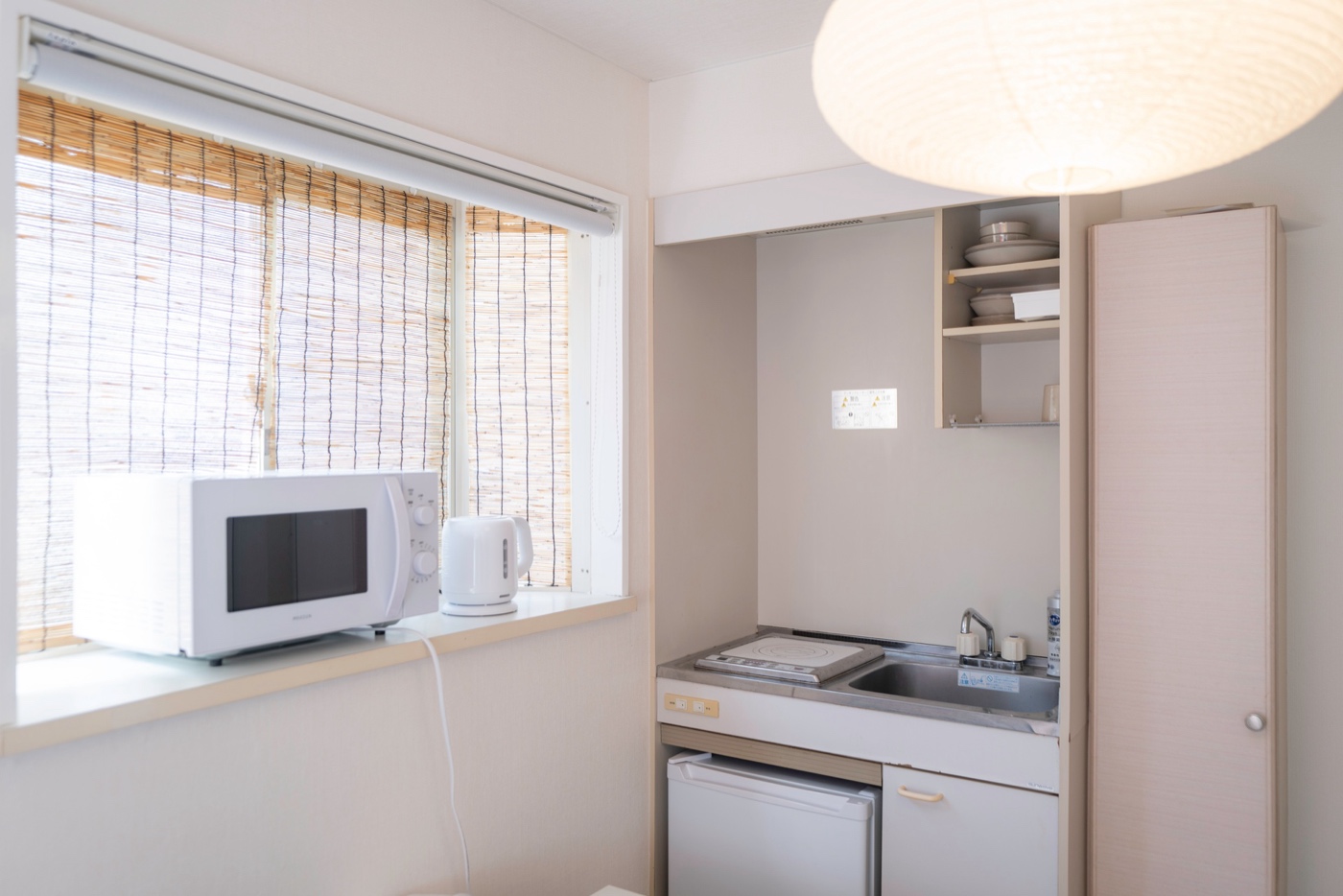
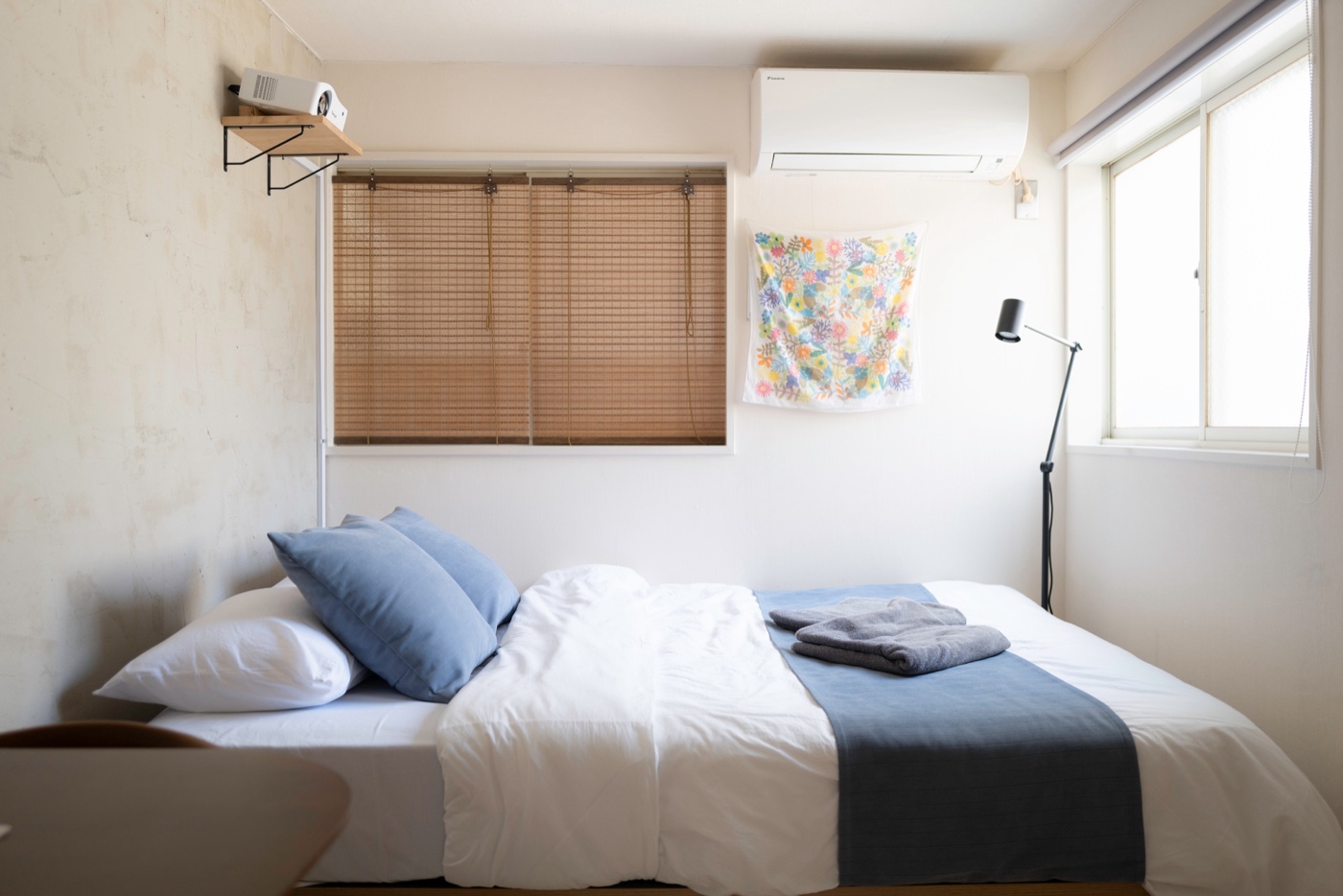
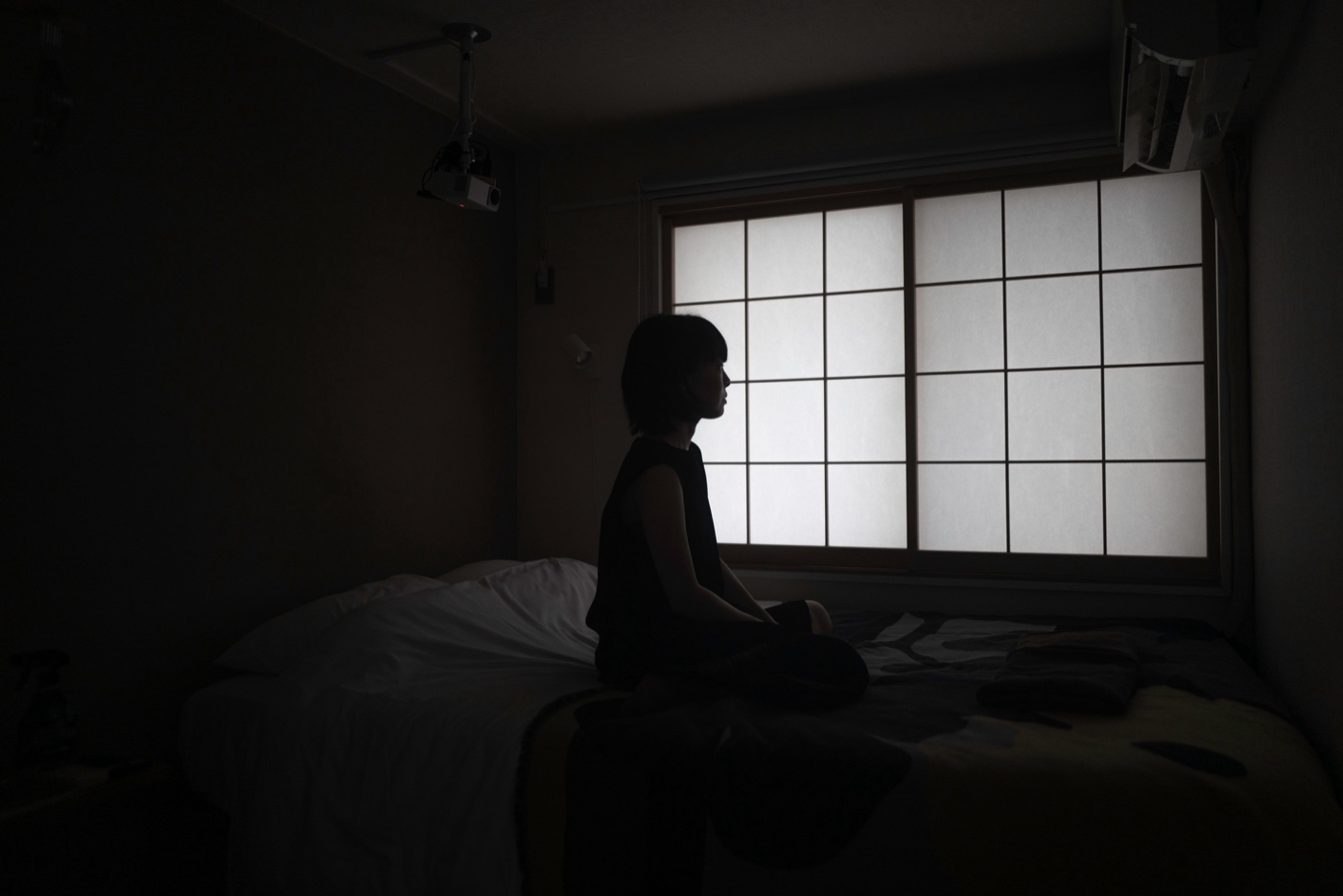
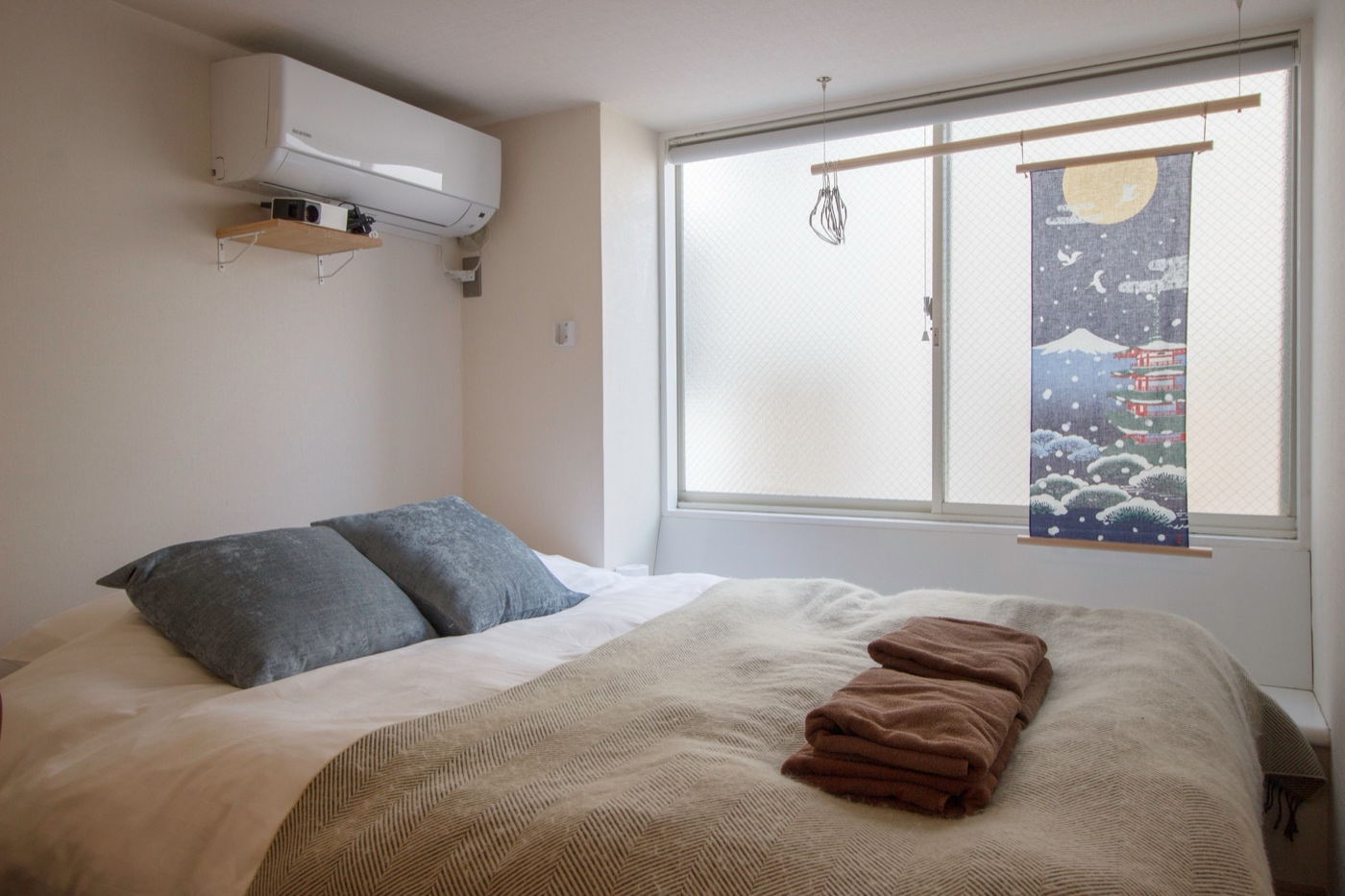
Tucked away on a quiet residential street just minutes from Ikebukuro Station, Kaku offers five individually designed studio apartments for travelers who want more than a hotel room. Each flat blends Japanese minimalism with thoughtful design details — concrete accent walls, bamboo blinds, calligraphy art, and curated furnishings that make a short stay feel like living in Tokyo rather than just visiting.
The studios are ideal for solo travelers and couples looking for a self-contained base in one of Tokyo’s most convenient neighborhoods. Every unit sleeps up to two guests and comes with its own private bathroom, kitchenette, and everything you need for a comfortable stay.
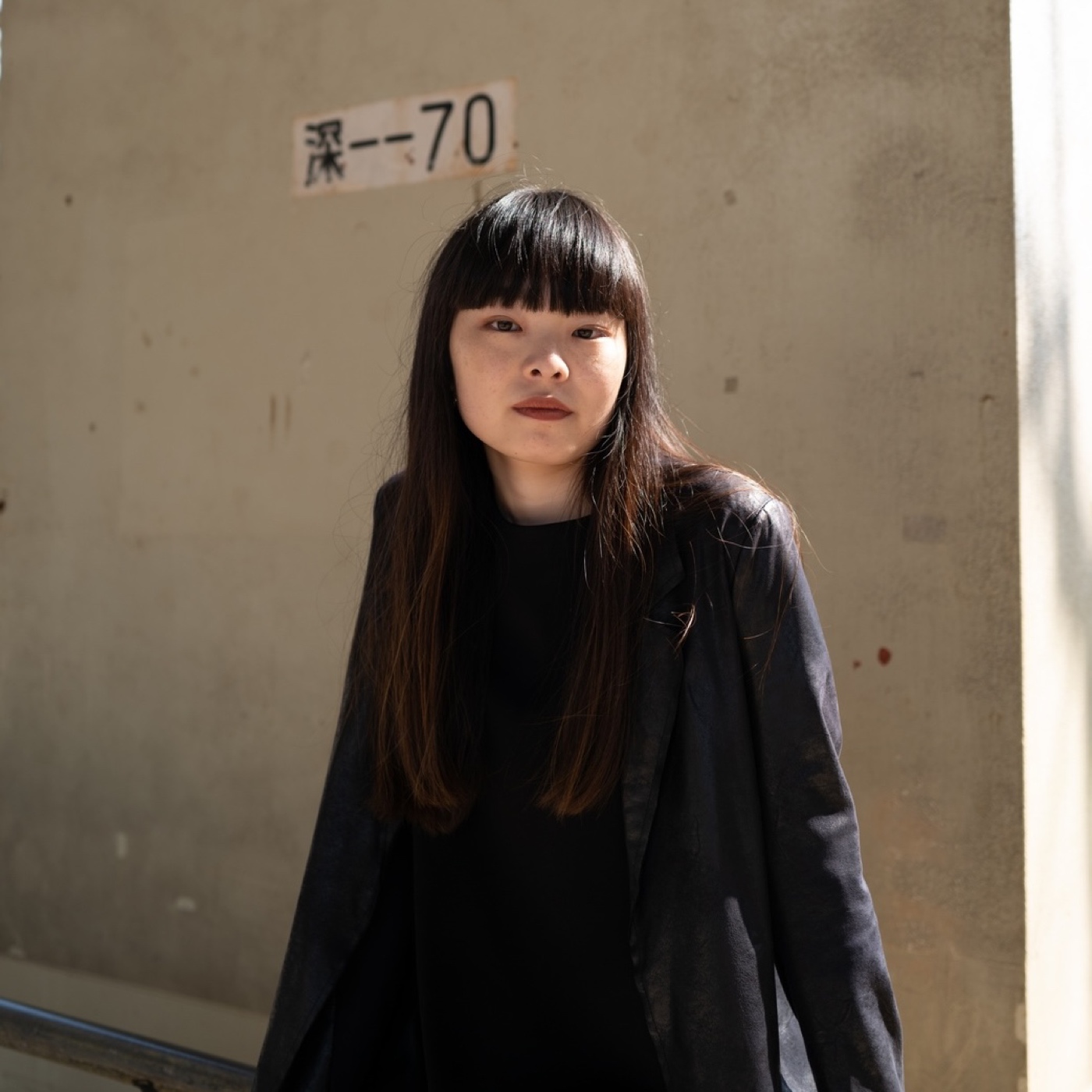
Interview with Koharu — Owner of KAKU, Ikebukuro
Born in 1994 in Sapporo, Koharu studied Architecture in Tokyo, where she went on to work as an architect and interior designer. After two years in London, she returned to Japan and began practising Sogetsu ikebana. Today she runs KAKU, a minpaku in Ikebukuro where architecture, nature, and the art of impermanence come together.
Giorgio: You went from architecture to ikebana — two worlds that seem quite far apart. What triggered that shift?
Koharu: They’re actually closer than you’d think. As an architect I was always shaping space, but after years in the industry I started feeling uneasy about the cycle — you build, you demolish, and the memories people had in those spaces just disappear. One evening, during a particularly exhausting stretch of work, I caught a sunset that stopped me in my tracks. A few days later I tried an ikebana class, and the moment I touched the branches something clicked. I felt a vitality I had completely forgotten.
Giorgio: You then left Japan for London. What did that experience give you?
Koharu: Perspective, mostly. I volunteered in the countryside, tried sustainable living, even worked in a florist’s. Being away from Tokyo helped me realise that my longing for nature wasn’t just a phase — it was becoming my identity. When I came back, I found my teacher in Sogetsu ikebana, Ms Miharu Akiyama, and everything fell into place.
Giorgio: How did all of this shape the way you designed KAKU?
Koharu: KAKU is where everything converges. My architecture background gave me the tools — how to work with light, proportion, materials. Ikebana taught me to embrace impermanence and asymmetry, to leave space for the unexpected. I wanted guests to feel that balance: a space that’s designed with intention but still breathes, still feels alive. You’ll notice natural materials, seasonal touches, arrangements that change. It’s not a showroom — it’s a living space.
Giorgio: Tokyo is constantly building and tearing down. How do you feel about that as someone who comes from architecture?
Koharu: It’s complicated. I understand the need for redevelopment, especially with earthquake safety. But there’s something lost every time a building comes down — not just the structure, but the life that happened inside it. With KAKU, I wanted to create something that honours that tension. A space that feels rooted, even though it’s small and new. I think that’s what ikebana teaches you: even something temporary can be deeply meaningful.
Giorgio: What message do you hope guests take away from staying at KAKU?
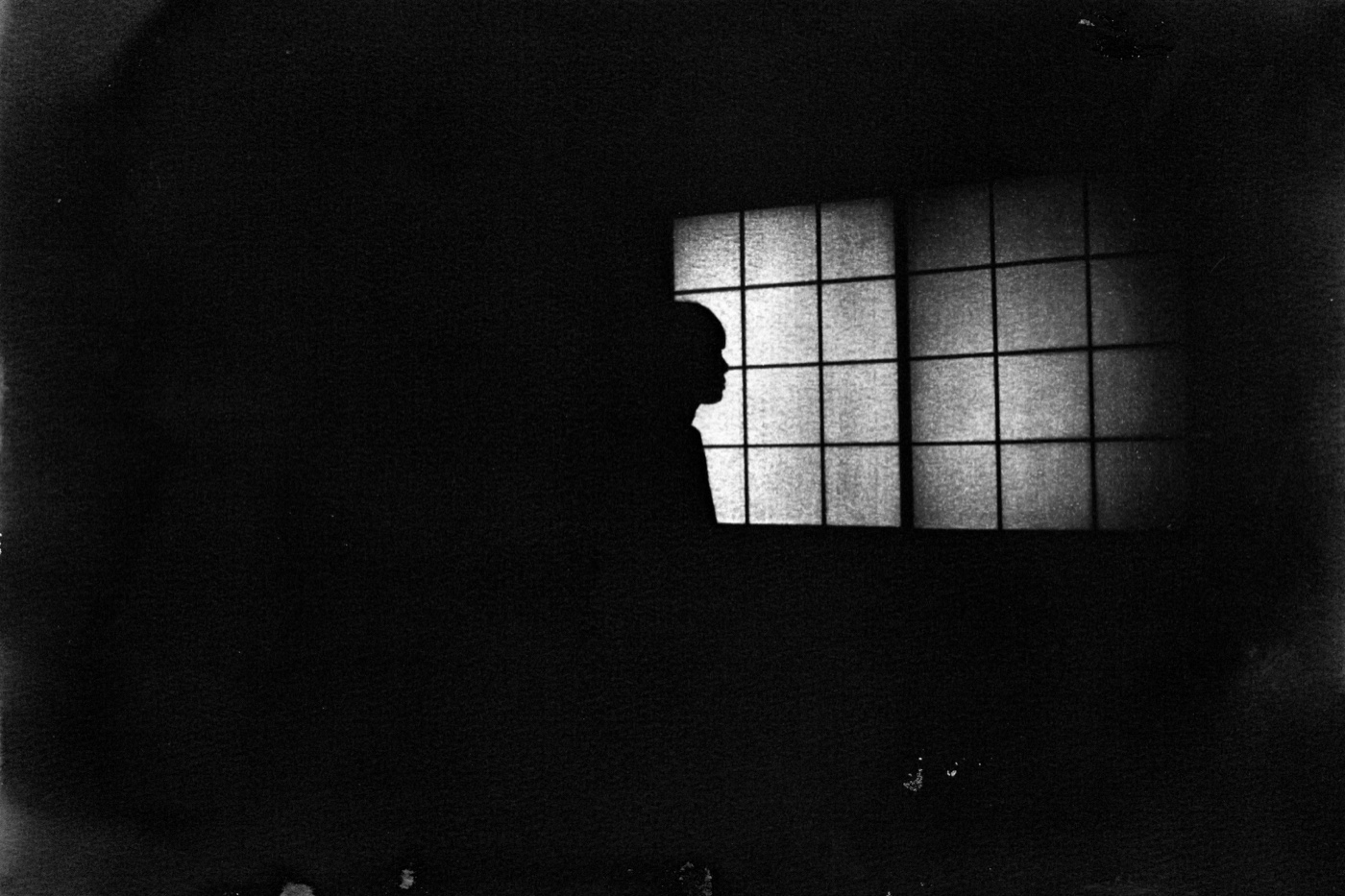
Koharu: That beauty doesn’t have to be permanent to matter. I hope they slow down, notice the details — a branch, a shadow, the way light moves through the room. If they leave feeling a little more connected to the space around them, that’s enough.